AP Government  ·  Block 1  ·  Mr. Savage

How
Media
Shapes
Democracy

How increasingly diverse media choices influence political institutions and behavior.

Aden Muhamedagic Bruce Giles Ken Allen
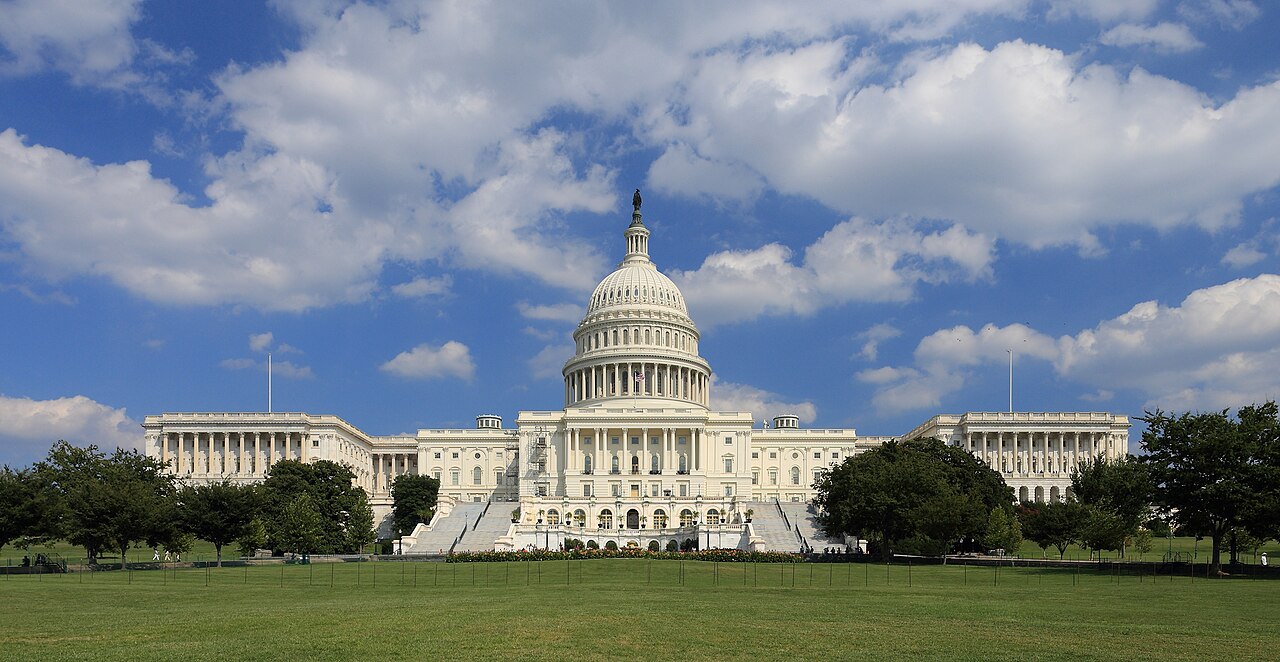
US Capitol Building
3
Key Factors
9
Credible Sources
86%
Americans — Digital News
32%
Trust Mass Media
Increased Media Choices Ideologically Oriented Programming Consumer-Driven Media & Emerging Technologies Democratic Debate Political Knowledge Increased Media Choices Ideologically Oriented Programming Consumer-Driven Media & Emerging Technologies Democratic Debate Political Knowledge
01

Factor One

Increased Media Choices

More platforms, less shared reality

86%
get news from a digital device
Pew Research, 2023 1
4+
avg. platforms used for news
Pew Research, 2023 1
32%
trust in mass media (near record low)
Gallup, 2023 4
22%
still read print news regularly
Pew Research, 2023 1
Where Americans Get News (% of adults) — Pew Research Center, 2023 1
Modern TV newsroom
The Modern Newsroom
TV, podcasts, social media, and newsletters all compete for your attention — and your political views.
Unsplash (Free Use)
Key Impact

When everyone picks their own source, Americans lose the shared facts needed for democratic debate. 3

02

Factor Two

Ideologically Oriented Programming

Cable news audiences are almost entirely partisan

Cable News Audience Party Composition — Pew Research Center, 2020 5
more partisan content on cable, 2020 vs. 2000
Levendusky & Malhotra, 2016 6

"Partisan media increases polarization and reduces willingness to compromise."

— Levendusky & Malhotra, Political Communication 6
Political press conference
Politics & The Press
Politicians know which networks their base watches — and craft messages accordingly.
📺
Outrage = Ratings
Networks profit from conflict. Partisan framing keeps viewers watching longer. 7
🧠
More Extreme Views
Viewers of partisan media gradually hold more radical positions. 6
🗳️
Less Compromise
One-sided viewing reduces willingness to engage with opposing views. 6
📉
Shared Facts Decline
Partisan viewers understand policy facts very differently from each other. 5
Key Impact

Partisan viewers hold different understandings of basic policy facts — making productive debate nearly impossible. 5

03

Factor Three

Consumer-Driven Media & Emerging Tech

Algorithms trap users inside information bubbles

50%
of Americans get news from social media
Pew Research, 2023 1
−23%
political knowledge vs. traditional news readers
Mitchell et al., Pew 2020 2
more likely to share false news than accurate news
Horwitz & Seetharaman, WSJ 9
American Trust in Mass Media Over Time (%) — Gallup 4
The Filter Bubble Effect — Pariser, 2011 8
Liberal
Bubble
MSNBC
NPR

Conservative views appear fringe or extreme

Algorithm
🤖
Barrier
Conservative
Bubble
Fox
OAN

Liberal views appear fringe or extreme

Social network visualization
The Algorithm Decides
Facebook's own research confirmed its algorithm amplified divisive content because it drove more engagement — even when misleading.
Unsplash (Free Use) · WSJ Investigation 9
Political Knowledge: Social Media vs. Traditional News — Pew Research, 2020 2
Key Impact

Citizens in separate information worlds disagree on basic facts — productive democratic debate collapses. 7

Works Cited

MLA 9th Edition  ·  Block 1 — Mr. Savage  ·  Muhamedagic · Giles · Allen

  1. 1Pew Research Center. "News Platform Fact Sheet." Journalism Project, 15 Nov. 2023, www.pewresearch.org/journalism/fact-sheet/news-platform-fact-sheet/.
  2. 2Mitchell, Amy, et al. "Americans Who Mainly Get Their News on Social Media Are Less Engaged, Less Knowledgeable." Pew Research Center, 30 July 2020, www.pewresearch.org/journalism/2020/07/30.
  3. 3Prior, Markus. Post-Broadcast Democracy. Cambridge University Press, 2007.
  4. 4Newport, Frank. "Americans' Trust in Media Remains Near Record Low." Gallup, 19 Oct. 2023, news.gallup.com/poll/512861.
  5. 5Jurkowitz, Mark, et al. "U.S. Media Polarization and the 2020 Election." Pew Research Center, 24 Jan. 2020, www.pewresearch.org/journalism/2020/01/24.
  6. 6Levendusky, Matthew, and Neil Malhotra. "Does Media Coverage of Partisan Polarization Affect Political Attitudes?" Political Communication, vol. 33, no. 2, 2016, pp. 283–301.
  7. 7Sunstein, Cass R. Republic: Divided Democracy in the Age of Social Media. Princeton University Press, 2017.
  8. 8Pariser, Eli. The Filter Bubble: What the Internet Is Hiding from You. Penguin Press, 2011.
  9. 9Horwitz, Jeff, and Deepa Seetharaman. "Facebook Executives Shut Down Efforts to Make the Site Less Divisive." The Wall Street Journal, 26 May 2020, www.wsj.com/articles/facebook-knows-it-encourages-division.
  10. 10Pexels. Various photographs used under the Pexels Free License. www.pexels.com.